.png)


What Is the Marketing Copilot?
The Marketing Copilot is Cavaco's AI brain — it continuously analyzes your store data, customer behavior, and campaign performance to surface actionable insights and recommend specific marketing actions.
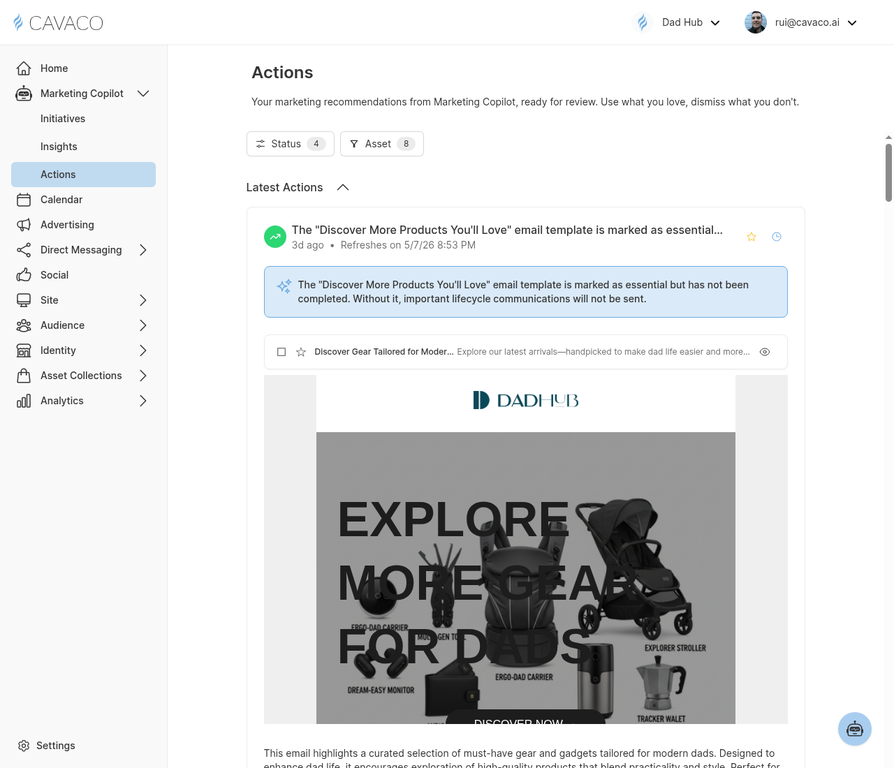
The Actions tab shows AI-recommended marketing actions ranked by expected revenue impact.
Actions
The Actions tab shows a prioritized list of specific marketing tasks the AI recommends you take right now. Each action includes an expected revenue impact estimate, the audience it targets, and a one-click option to execute it. Actions are refreshed daily as new data comes in.
Insights
The Insights tab surfaces data-driven findings about your store and customers. These are observations — patterns the AI has detected — that inform your broader strategy.
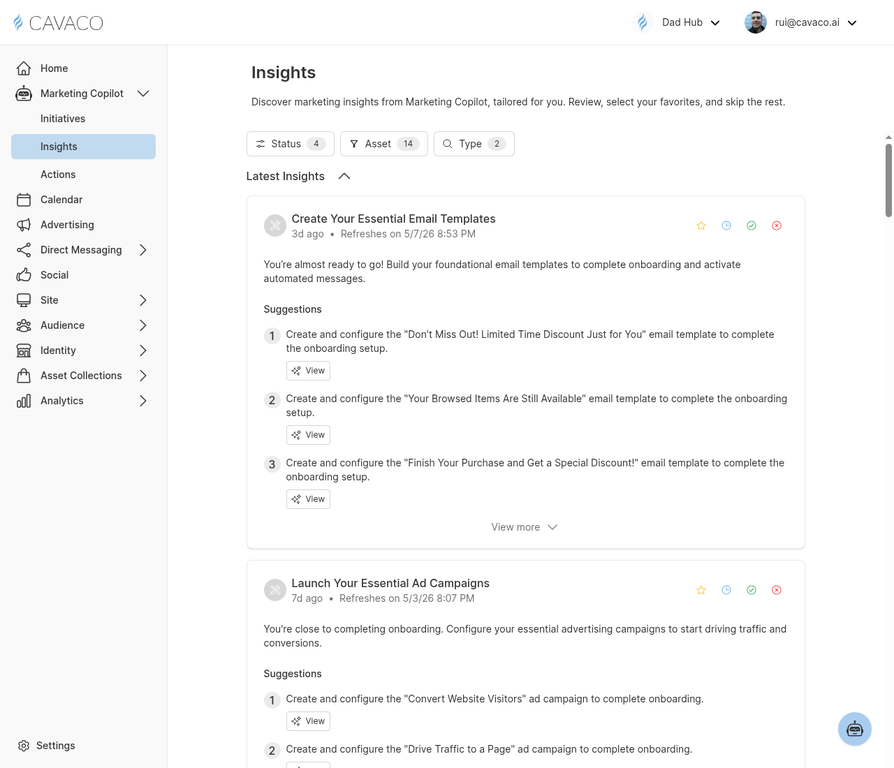
The Insights tab surfaces data-driven findings about your store performance and customer behavior.
Initiatives
The Initiatives tab shows longer-horizon strategic programs the AI has identified as growth opportunities. Unlike individual Actions, Initiatives are multi-step programs — for example, "Launch a loyalty program for your top 20% of customers."
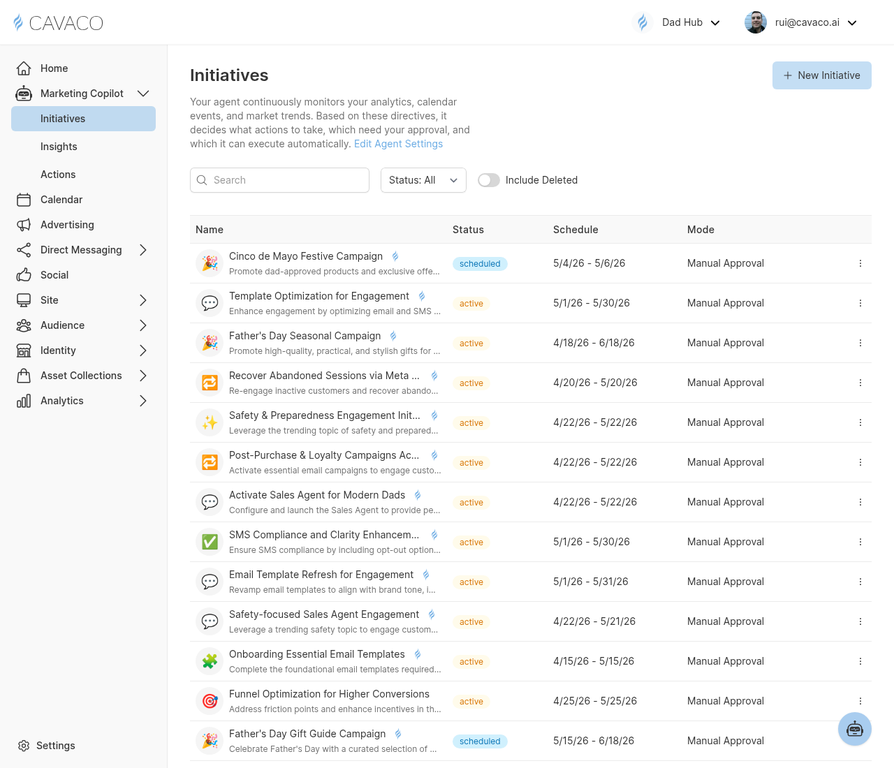
The Initiatives tab shows strategic multi-step programs recommended by the AI.
How the AI Makes Recommendations
The Marketing Copilot uses your store's historical order data, customer behavior, email engagement metrics, and industry benchmarks to generate recommendations. Meaningful recommendations typically start appearing within 7–14 days of connecting your store.
What Data Feeds the Marketing Copilot?
To generate highly relevant recommendations, the Marketing Copilot continuously analyzes a comprehensive set of data points across your entire account. This ensures that every suggestion is grounded in real-time performance and your specific business context.
- Account & Strategy Context: Your brand's tone of voice, industry, active marketing strategy, and the specific goals and hypotheses of your current initiatives.
- Calendar & Asset Context: What is currently scheduled on your marketing calendar, what assets are available (campaigns, widgets, templates, candidate brand assets), and dynamic user variables.
- Real-Time Analytics: Campaign revenue, channel breakdown (email vs. SMS vs. ads), funnel conversion rates, and product/segment performance.
- Customer Event Data: Granular interactions including browsing history, device usage, geolocation, and engagement across all channels (e.g., email opens, ad clicks, widget views).
- Insight Triggers: The AI actively watches for performance drops, calendar gaps, unpersonalized segments, social trends, and seasonal events to proactively suggest timely actions.
.png)